2022 Tesla Model 3
Recalls, most-reported problems, crash-test ratings, fuel economy and what a 2022 Tesla Model 3 is worth — from official NHTSA and EPA data. 2,107 on record.
2022 Tesla Model 3 at a glance
Free: that car's specs and build sheet, model-year recall campaigns and a fair price.
2022 Tesla Model 3 recalls 18
Tesla, Inc. (Tesla) is recalling certain 2017-2023 Model 3 and 2020-2023 Model Y vehicles. The headlight low beams may be too bright and exceed the maximum light output. As such, these vehicles fail to comply with the requirements of Federal Motor Vehicle Safety Standard (FMVSS) number 108, "Lamps, Reflective Devices, and Associated Equipment."
Fix: Tesla Service will replace the headlights, free of charge. Owner notification letters are expected to be mailed October 3, 2026. Owners may contact Tesla customer service at 1-877-798-3752. Tesla's number for this recall is SB-24-17-003.
Tesla, Inc. (Tesla) is recalling certain 2017, 2021-2023 Model 3, 2020-2023 Model Y, 2021-2023 Model S, and Model X vehicles operating software version 2026.8.6. The rearview camera image may be delayed when the vehicle is placed in reverse. As such, these vehicles fail to comply with the requirements of Federal Motor Vehicle Safety Standard number 111, "Rear Visibility."
Fix: Tesla has released an over-the-air (OTA) software update, free of charge. Owner notification letters were mailed July 3, 2026. Owners may contact Tesla customer service at 1-877-798-3752. Tesla's number for this recall is SB-26-00-001.
Tesla, Inc. (Tesla) is recalling certain 2024 Cybertruck, 2017-2025 Model 3, and 2020-2025 Model Y vehicles. The tire pressure monitoring system (TPMS) warning light may not remain illuminated between drive cycles, failing to warn the driver of low tire pressure. As such, these vehicles fail to comply with the requirements of Federal Motor Vehicle Safety Standard number 138, "Tire Pressure Monitoring Systems."
Fix: Tesla released an over-the-air (OTA) software update, free of charge. Owner notification letters were mailed February 15, 2025. Owners may contact Tesla customer service at 1-877-798-3752. Tesla's number for this recall is SB-24-00-018.
Tesla, Inc. (Tesla) is recalling certain 2021-2024 Model 3, Model S, Model X, and 2020-2024 Model Y vehicles. The hood latch assembly may fail to detect an unlatched hood condition after the hood has been opened.
Fix: Tesla has released an over-the-air (OTA) software update, free of charge. Owner notification letters were mailed September 24, 2024. Owners may contact Tesla customer service at 1-877-798-3752. Tesla's number for this recall is SB-24-00-012.
Tesla, Inc. (Tesla) is recalling certain 2012-2024 Model S, 2015-2024 Model X, 2017-2023 Model 3, and 2020-2023 Model Y vehicles. In the event of an unbelted driver, the seat belt warning light and audible chime may not activate as intended. As such, these vehicles fail to comply with the requirements of Federal Motor Vehicle Safety Standard number 208, "Occupant Crash Protection."
Fix: Tesla will release an over-the-air (OTA) software update. Owner notification letters were mailed July 26, 2024. Owners may contact Tesla customer service at 1-877-798-3752. Tesla's number for this recall is SB-24-00-008.
Tesla, Inc. (Tesla) is recalling certain 2013, 2018-2021 Model S, 2020-2021 Model X, 2018-2022 Model 3, and 2020-2022 Model Y vehicles. A factory reset muted the Pedestrian Warning System (PWS) sounds. As such, these vehicles fail to comply with the requirements of Federal Motor Vehicle Safety Standard number 141, "Minimum Sound Requirements for Hybrid and Electric Vehicles."
Fix: Tesla released an over-the-air (OTA) software update, release 2023.44.30.14, free of charge. Owner notification letters were mailed April 27, 2024. Owners may contact Tesla customer service at 1-877-798-3752. Tesla's number for this recall is SB-24-00-006.
Tesla, Inc. (Tesla) is recalling certain 2012-2023 Model S, 2016-2024 Model X, 2017-2023 Model 3, 2019-2024 Model Y, and 2024 Cybertruck vehicles. An incorrect font size is displayed on the instrument panel for the Brake, Park, and Antilock Brake System (ABS) warning lights. As such, these vehicles fail to comply with the requirements of Federal Motor Vehicle Safety Standard number 105, "Hydraulic and Electric Brake…
Fix: Tesla began releasing an over-the-air (OTA) software update, free of charge. Owners may contact Tesla customer service at 1-877-798-3752. Tesla's number for this recall is SB-24-00-003.
Tesla, Inc. (Tesla) is recalling 2012-2023 Model S, 2016-2023 Model X, 2017-2023 Model 3, and 2020-2023 Model Y vehicles equipped with all versions of Autosteer leading up to the version(s) that contains the recall remedy. In certain circumstances when Autosteer is engaged, the prominence and scope of the feature's controls may not be sufficient to prevent driver misuse of the SAE Level 2 advanced driver-assistance …
Fix: Tesla will release an over-the-air (OTA) software update, free of charge. Owner notification letters were mailed February 10, 2024. Owners may contact Tesla customer service at 1-877-798-3752. Tesla's number for this recall is SB-23-00-008.
Tesla, Inc. (Tesla) is recalling certain 2016-2023 Model S, Model X, 2017-2023 Model 3, and 2020-2023 Model Y vehicles equipped with Full Self-Driving Beta (FSD Beta) software or pending installation. The FSD Beta system may allow the vehicle to act unsafe around intersections, such as traveling straight through an intersection while in a turn-only lane, entering a stop sign-controlled intersection without coming t…
Fix: Tesla will release an over-the-air (OTA) software update, free of charge. Owner notification letters were mailed April 15, 2023. Owners may contact Tesla customer service at 1-877-798-3752. Tesla's number for this recall is SB-23-00-001.
Tesla, Inc. (Tesla) is recalling certain 2017-2022 Model 3 vehicles. The second-row left seat belt buckle and second-row center seat belt anchor may have been incorrectly reassembled during vehicle service.
Fix: Tesla Service will inspect and reassemble the seat belt anchors as necessary, free of charge. Owner notification letters were mailed December 20, 2022. Owners may contact Tesla customer service at 1-877-798-3752. Tesla's number for this recall is SB-22-20-004.
Tesla, Inc. (Tesla) is recalling certain 2017-2022 Model 3, 2020-2022 Model Y, and 2021-2022 Model S and Model X vehicles. The window automatic reversal system may not react correctly after detecting an obstruction. As such, these vehicles fail to comply with the requirements of Federal Motor Vehicle Safety Standard number 118, "Power-Operated Window Systems."
Fix: Tesla will perform an over-the-air (OTA) software update of the automatic window reversal system, free of charge. Owner notification letters were mailed March 31, 2032. Owners may contact Tesla customer service at 1-877-798-3752. Tesla's number for this recall is SB-22-00-013.
Tesla, Inc. (Tesla) is recalling certain 2021-2022 Model S, Model X, and 2022 Model 3 and Model Y vehicles operating certain firmware releases. The infotainment central processing unit (CPU) may overheat during the preparation or process of fast-charging, causing the CPU to lag or restart.
Fix: Tesla will perform an over-the-air (OTA) software update that will improve CPU temperature management, free of charge. Owner notification letters were mailed July 1, 2022. Owners may contact Tesla customer service at 1-877-798-3752. Tesla's number for this recall is SB-22-00-009.
Source: U.S. NHTSA, checked 7 Oct 2026. A campaign covers the model year; to see whether a particular car still needs the repair, check its VIN on NHTSA.gov or ask a franchised dealer.
2022 Tesla Model 3 common problems
The most-reported problem areas across all 765 owner complaints filed with NHTSA — and what to check before you buy.
2022 Tesla Model 3 safety ratings
Rollover risk: 6.6% — NHTSA's estimated chance of rollover in a single-vehicle crash (dynamic test: no tip).
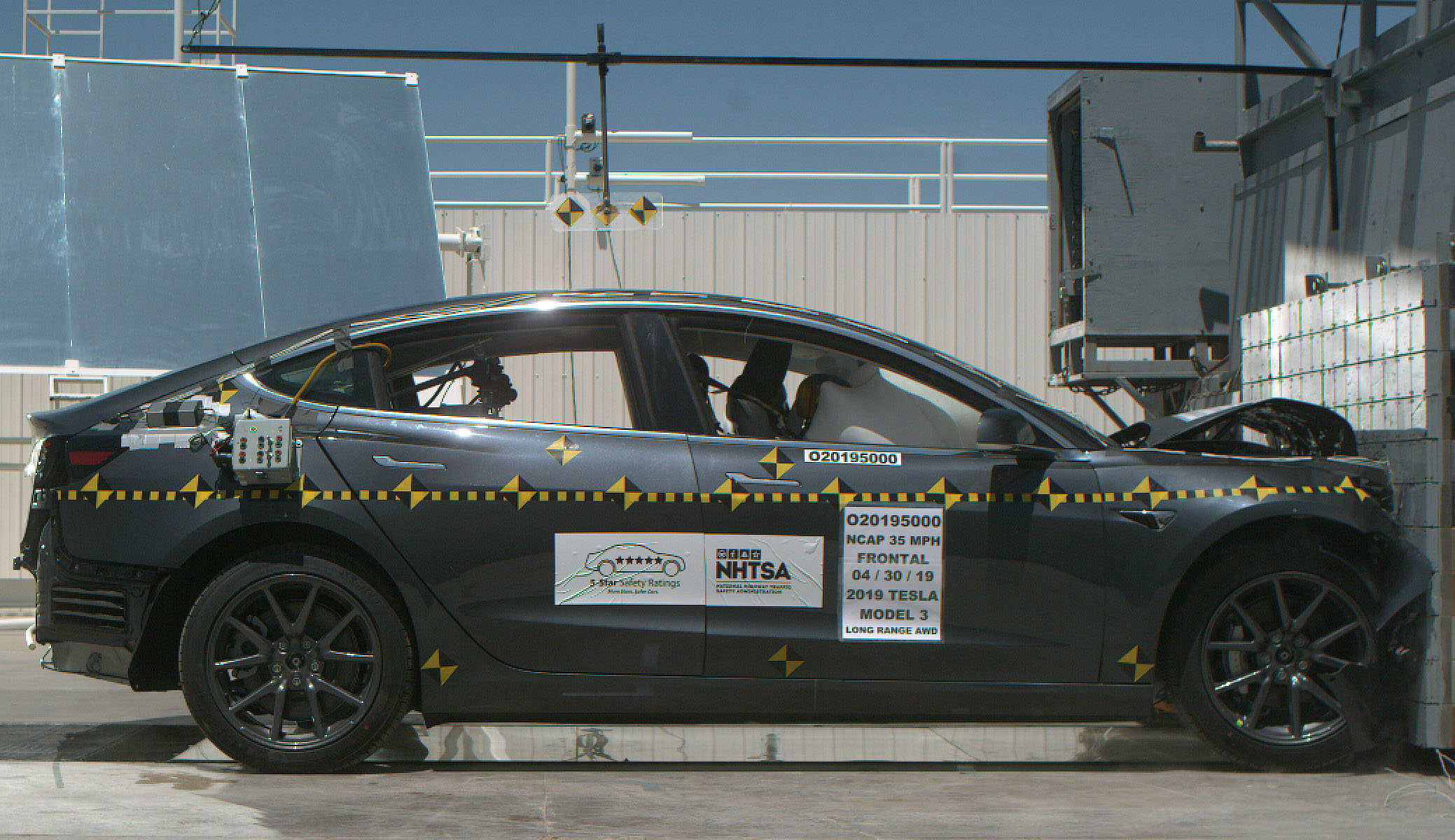
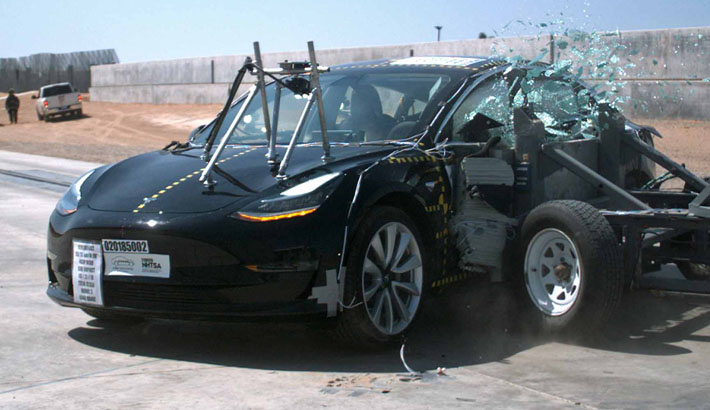
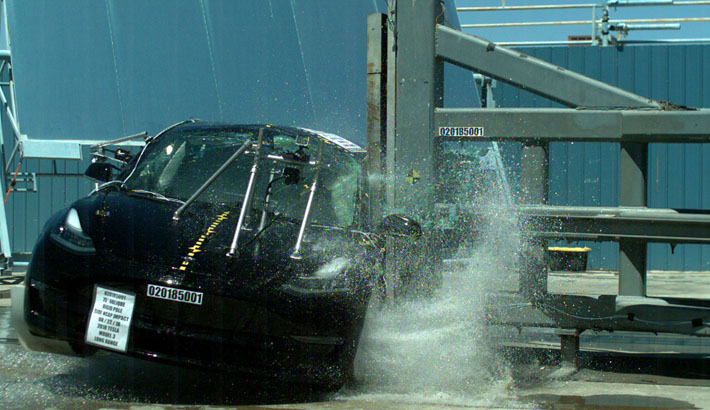
Source: NHTSA 5-Star Safety Ratings (NCAP), tested as the 2022 Tesla Model 3 4 DR AWD. Ratings can differ by body style and drivetrain.
2022 Tesla Model 3 efficiency & running costs
Source: U.S. EPA / DOE fueleconomy.gov. The EPA lists 3 versions of this model year; combined is shown as a range and the other figures are averages.
Estimated 5-year cost to own
A rough guide to what running a 2022 Tesla Model 3 costs over five years and 75,000 miles.
How this is estimated: energy is the U.S. EPA annual cost at 15,000 miles a year. There aren't enough comparable listings to estimate depreciation for this model, so it is left out. Not included: insurance, maintenance, repairs, taxes, registration and finance costs. Treat it as a comparison guide, not a quote.
Dimensions & weight
Manufacturer-reported figures for the 2022 Tesla Model 3 — ranges cover the 4 body / drivetrain versions on record. Source: Transport Canada vehicle specifications via NHTSA.
Investigations & service bulletins
NHTSA defect investigations 12
FSD Collisions in Reduced Roadway Visibility Conditions Open
The Office of Defects Investigation (ODI) is opening this Engineering Analysis to evaluate Tesla’s Full Self Driving Beta and Full Self Driving (Supervised) (collectively, FSD) degradation detection system. The focus of this investigation will be to assess the system’s ability, when encountering reduced roadway visibility conditions, to detect degradation and alert the driver with sufficient time to respond. ODI will…
NHTSA #EA26002 · Electrical System · opened Mar 2026Emergency egress controls are not readily accessible and clearly identifiable. Closed
The Office of Defects Investigation (ODI) has completed its review of a defect petition received on November 24, 2025, requesting an investigation into the emergency mechanical door release in 2022 Model Year (MY) Tesla Model 3. The petition alleges that the controls for the emergency mechanical door release are not accessible and clearly identifiable and thus fail to comply with Federal Motor Vehicle Safety Standar…
NHTSA #DP25002 · Structure · opened Dec 2025 · closed Jul 2026Traffic safety violations while Full Self Driving ("FSD") is engaged Open
The Office of Defects Investigation (“ODI”) is opening this Preliminary Evaluation (PE) to assess the scope, frequency, and potential safety consequences of FSD executing driving maneuvers that constitute traffic safety violations. This investigation concerns versions of FSD that Tesla has labeled as "FSD (Supervised)" and "FSD (Beta)." Tesla characterizes FSD as an SAE Level 2 partial automation system requiring a ful…
NHTSA #PE25012 · Electrical System · opened Oct 2025Compliance with Standing General Order 2021-01 Reporting Requirements Open
The Office of Defects Investigation (“ODI”) has identified numerous incident reports submitted by Tesla, Inc. (“Tesla”) in response to Standing General Order 2021-01 (the “SGO”), in which the reported crashes occurred several months or more before the dates of the reports. The majority of these reports involved crashes in which the Standing General Order in place at the time required a report to be submitted within o…
NHTSA #AQ25002 · Electrical System · opened Aug 2025FSD Collisions in Reduced Roadway Visibility Conditions Closed
On October 17, 2024, NHTSA’s Office of Defects Investigation (ODI) opened a Preliminary Evaluation (PE24031) of Tesla’s Full Self Driving Beta and Full Self Driving (Supervised) (collectively, FSD) to assess: the ability of the FSD system to detect and respond appropriately to reduced roadway visibility conditions; whether any other FSD crashes had occurred under degraded roadway visibility conditions that are simila…
NHTSA #PE24031 · Electrical System · opened Oct 2024 · closed Mar 2026Recall 23V838 Remedy Effectiveness Open
The Office of Defects Investigation (ODI) is opening a Recall Query to assess the remedy adequacy of Recall 23V838. On December 12, 2023, Tesla filed a Defect Information Report (Recall 23V838) applicable to all Tesla models produced and equipped with any version of its Autopilot system, which Tesla described as an SAE Level 2 (L2) Advanced Driver Assistance System (ADAS). Autopilot is the simultaneous engagement of…
NHTSA #RQ24009 · Electrical System · opened Apr 2024Sudden Unintended Acceleration Open
The Office of Defects Investigation (ODI) received a petition requesting that ODI reevaluate its decision to deny DP20-001 on the basis that intermittent high electrical current demands on the vehicles' 12VDC systems may have caused some or all of the incidents examined by ODI in DP20-001. The petitioner bases this information on a review of open-source research and the DP20-001 denial. The petition and related mater…
NHTSA #DP23002 · Vehicle Speed Control · opened Jun 2023Defect Petition Interlock Request Closed
On March 21, 2023, the Office of Defects Investigation (ODI) received a petition requesting a “recall of all Tesla cars” produced from 2013 to the date on which the petition was filed due to what Petitioner considers to be the increased likelihood of pedal misapplication. Attached to the Petition is a paper authored by Petitioner. According to Petitioner, the differences in the operator controls between the subject T…
NHTSA #DP23001 · opened Apr 2023 · closed Mar 2026Pedestrian alert sounds Closed
NHTSA received a petition on or about July 18, 2022, requesting that Federal Motor Vehicle Safety Standard (FMVSS) 141 be applied to all electric and hybrid vehicles operating in the United States. The petition can be reviewed at NHTSA.gov under ODI Number 11486072. FMVSS 141 establishes performance requirements for pedestrian alert sounds for motor vehicles. The standard applies to hybrid and electric vehicles that…
NHTSA #DP22005 · Electrical System · opened Jan 2023 · closed Aug 2023Autopilot System Driver Controls Closed
The Office of Defects Investigation (ODI) upgraded PE21020 to EA22002 on June 8, 2022, to extend work and deepen the PE21020 crash analysis, to supplement that analysis with additional data, and to perform vehicle evaluations to understand how Tesla’s Autopilot system may exacerbate human factors or behavioral safety risks by undermining the effectiveness of the driver’s supervision. To support this work, ODI collect…
NHTSA #EA22002 · Electrical System · opened Jun 2022 · closed Apr 2024Unexpected Brake Activation Closed
On February 16, 2022, the Office of Defects Investigation (ODI) opened a Preliminary Evaluation (PE22002) to investigate reports of unexpected deceleration while driving with the adaptive cruise control system engaged in Model Year (MY) 2021 – 2022 Model 3 and Model Y vehicles manufactured by Tesla. The subject systems include Autopilot (all versions), Full Self-Driving (FSD) and Traffic Aware Cruise Control (TACC).…
NHTSA #PE22002 · Forward Collision Avoidance · opened Feb 2022 · closed Jun 2026Tesla Passenger Play Closed
The Office of Defects Investigation (ODI) opened Preliminary Evaluation (PE21-023) on December 21, 2021, to evaluate the driver distraction potential and use frequency / circumstances of in-vehicle game-play functionality referred to as “Passenger Play” in certain model year (MY) 2017-2022 Tesla Model 3, S, X, and Y vehicles. Distracted driving can result in an increased risk of a crash. PE21-023 was prompted by the…
NHTSA #PE21023 · Equipment · opened Dec 2021 · closed May 2023An investigation means NHTSA is examining a possible defect — it is not a recall, and many close without one.
Manufacturer service bulletins 76
Technical notes the manufacturer sent to dealers about known issues and fixes. Useful to mention to a mechanic — they are not recalls and repairs may not be free. Showing the 10 most recent of 76.
On certain Model 3 vehicles, brake lines may be corroded beyond acceptable limits, which may result in loss of brake fluid. Loss of brake fluid will result in a customer facing alert if the fluid reaches the predetermined level to trigger an alert. Upon custom…
Bulletin SB-26-33-001 · Service Brakes · May 2026On certain Model 3 vehicles, brake lines may be corroded beyond acceptable limits, which may result in loss of brake fluid. Loss of brake fluid will result in a customer facing alert if the fluid reaches the predetermined level to trigger an alert. Upon custom…
Bulletin SB-26-33-001 · Service Brakes · Feb 2026A firmware diagnosis feature is being introduced on Model 3 and Model Y vehicles that monitors wheel alignment over time. This feature detects changes in wheel alignment that may be related to incorrect tire pressures, degraded ball joints, bushings or damaged…
Bulletin SB-25-31-004 · Suspension · Jun 2025Tesla does not provide physical owner's manual copies. Instead, all available owner’s manual content is integrated into the vehicle software, and only the content relevant for a given vehicle, based on vehicle configuration and software version installed, is d…
Bulletin fsd-12-5-4_s3xy.pdf · Sep 2024Tesla does not provide physical owner's manual copies. Instead, all available owner’s manual content is integrated into the vehicle software, and only the content relevant for a given vehicle, based on vehicle configuration and software version installed, is d…
Bulletin fsd-12-5-4-1_s3xy.pdf · Sep 2024Tesla does not provide physical owner's manual copies. Instead, all available owner’s manual content is integrated into the vehicle software, and only the content relevant for a given vehicle, based on vehicle configuration and software version installed, is d…
Bulletin fsd-12-5-4_s3xy.pdf · Sep 2024Tesla does not provide physical owner's manual copies. Instead, all available owner’s manual content is integrated into the vehicle software, and only the content relevant for a given vehicle, based on vehicle configuration and software version installed, is d…
Bulletin fsd-12-5-3_s3xy.pdf · Sep 2024Tesla does not provide physical owner's manual copies. Instead, all available owner’s manual content is integrated into the vehicle software, and only the content relevant for a given vehicle, based on vehicle configuration and software version installed, is d…
Bulletin 2024.38_s3xy.pdf · Sep 2024Tesla does not provide physical owner's manual copies. Instead, all available owner’s manual content is integrated into the vehicle software, and only the content relevant for a given vehicle, based on vehicle configuration and software version installed, is d…
Bulletin 2024.26.9_s3xy.pdf · Sep 2024Tesla does not provide physical owner's manual copies. Instead, all available owner’s manual content is integrated into the vehicle software, and only the content relevant for a given vehicle, based on vehicle configuration and software version installed, is d…
Bulletin fsd-12-5-4-1_s3xy.pdf · Sep 2024Source: NHTSA Office of Defects Investigation, listed for the MODEL 3 RWD. Model-year data, not specific to one car.
Canadian recalls 11
Transport Canada recall campaigns for the 2022 Tesla Model 3. Relevant if the car was first sold in, or imported from, Canada.
Lights And Instruments
Issue: On certain vehicles, the low beam headlights may be too bright. Canadian regulations specify a maximum brightness for low beam headlights. Safety Risk: Low beam headlights that are too bright could cause reduced visibility for the driver and/or glare for oncoming drivers and increase the risk of a crash. Corrective Actions: Tesla will notify owners by email. The correcti…
Transport Canada #2026401 · Aug 2026Visual System
Issue: On certain vehicles, a software problem could delay the rearview camera image from displaying when the transmission is shifted into reverse shortly after the vehicle is started. Canadian regulations require the rearview image to display within 2 seconds of shifting the transmission into reverse gear. Safety Risk: A rearview camera image that doesn't display could reduce…
Transport Canada #2026221 · May 2026Electrical
Issue: On certain vehicles, the hood latch assembly could fail and cause the unlatched hood warning not to display on the instrument panel. As a result, you may not be aware that the hood isn't latched properly. If this happens, the hood could open suddenly while driving. Safety Risk: A hood that opens suddenly while driving can block the driver's view and increase the risk of…
Transport Canada #2024427 · Jul 2024Seats And Restraints
Issue: On certain vehicles, the seat belt reminder chime and visual warning may not work when you start the vehicle and your seat belt is not buckled. Canadian regulations require both a seat belt reminder sound and visual telltale when a driver is not wearing their seat belt. Safety Risk: A seat belt warning that doesn't work correctly may not remind you to buckle your seat be…
Transport Canada #2024298 · May 2024Lights And Instruments
Issue: A previous over-the-air (OTA) software update could cause the vehicle not to display the correct visual warning indicators when there are problems with the brake system or when the parking brake is applied. As a result, the BRAKE, PARK, and antilock brake system (ABS) visual indicators would display as text instead of symbols. Safety Risk: While there is a low risk to sa…
Transport Canada #2024283 · May 2024Other
Issue: On certain vehicles, a software problem could cause the pedestrian warning system not to work. As a result, the vehicle may not produce enough sound to be detected by other road users. New Canadian regulations require electric vehicles to make a minimum sound level when operating at low speeds. Safety Risk: A pedestrian warning system that doesn't work could create an in…
Transport Canada #2024130 · Feb 2024Source: Transport Canada Motor Vehicle Safety Recalls Database.
About the Tesla Model 3
The Tesla Model 3 is a battery electric powered mid-size sedan with a fastback body style built by Tesla, Inc., introduced in 2017. The Model 3 was marketed as a more affordable option compared to Tesla's previous vehicles, the Model S and Model X. The Model 3 was the world's top-selling plug-in electric car for three years, from 2018 to 2020, before the Tesla Model Y, a crossover SUV based on the Model 3 chassis, took the top spot. In June 2021, the Model 3 became the first electric car to pass global sales of 1 million.
From Wikipedia, licensed CC BY-SA 4.0. Describes the model line in general, not this model year specifically.
2022 Tesla Model 3 vehicles on record
Other Tesla Model 3 model years
2022 Tesla Model 3 — frequently asked questions
Does the 2022 Tesla Model 3 have any safety recalls?
NHTSA lists 18 recall campaigns for the 2022 Tesla Model 3. Whether an individual car still needs a recall repair depends on its VIN — check it on NHTSA.gov or ask a franchised dealer. Recall repairs are free.
What are the most common problems with the 2022 Tesla Model 3?
Across all 765 owner complaints filed with NHTSA, the most-reported problem areas are forward collision avoidance, vehicle speed control, service brakes.
What is the 2022 Tesla Model 3 safety rating?
NHTSA gives the 2022 Tesla Model 3 an overall crash-test rating of 5 out of 5 stars (frontal 5★, side 5★, rollover 5★).
What gas mileage does the 2022 Tesla Model 3 get?
The 2022 Tesla Model 3 has U.S. EPA estimates of 113–132 MPGe combined, depending on engine and trim (3 versions).
Sources: NHTSA (recalls, complaints, crash tests), U.S. EPA (fuel economy). Vehicle data only — CarLogs never shows owner information.